 العربية
 فارسى
فارسى Türkçe
 اُردُو
 Français
 Deutsch
 Kiswahili
 Español
 Azərbaycan
Cultural, social and humanitarian goals
The Department of Intellectual and Cultural Affairs was established by the Al-Abbas's (p) holy shrine in early 2006 after the adoption of the law of the holy shrines in the Iraqi constitution No. 19 of 2005 issued by the Iraqi National Assembly.
Among its objectives are to spread the thought of the Ahl Al-Bayt (peace be upon them), revive the Islamic manuscript heritage and other sciences, activate the scientific research movement, as well as strengthen family and social awareness in accordance with the tolerant Islamic faith inside and outside Iraq.
It also took the responsibility to work in the humanitarian field and support and coordinate efforts that contribute to ensuring a decent life for individuals, through launching many humanitarian and charitable projects, as well as its efforts in supporting volunteer work and spreading a culture of cooperation and participation in collective work.
The department was distinguished by a unique vision, as it seeks to raise the intellectual and cultural level in an optimal way, by reaching all segments, and feeding them with everything that is useful at the religious, family, social and cultural levels, to build relationships of exchange of experience with religious, intellectual and academic segments, adopt everything that is new and commensurate with the ideas of the true Sharia, and contribute to the revival of heritage.
The Department of intellectual affairs is one of the most important joints of the Al-Abbas's (p) holy shrine, expanding and opening up both internally and externally, with its active centers inside and outside Iraq, distinguished by its vitality and impulsiveness in the field of intellectual, cultural and humanitarian service, and this expansion came as a result of giving and dedication to serve the blessed cause.
Center for African Studies portal for the dissemination of Islamic culture
Based on the directives of the general secretariat of the Al-Abbas's (p) holy shrine in expanding the circle of scientific, knowledge, cultural and humanitarian communication with all continents of the world, including the African continent, in addition to the desire of many elites, intellectuals and activists in the field of scientific research and cultural activity to communicate with the holy shrine, and to take advantage of the scientific and cultural opportunities, programs, plans and projects provided by the Department of Intellectual and Cultural Affairs, the Center for African Studies was established in a step reflecting the spirit of Islamic Solidarity among the Muslim peoples.
The center provides various services on the African continent, including communication, cultural, scientific, service, and humanitarian services, in addition to reviving the memory of the Ahl al-Bayt (Allah's Prayers be upon him and upon his holy Household), through the establishment of Husseini and lamentation awareness councils, especially during blessed religious occasions.
The African Studies Center of the Department of Intellectual and Cultural Affairs at the Al-Abbas's (p) holy shrine is a precedent at the level of scientific, cultural and humanitarian activity, because it represents one of the specialized centers in the affairs of the African continent, and the fruit of efforts that lasted more than two years, including visiting many countries of the African continent, meeting with professors and specialists in African affairs, in addition to visiting many cultural and scientific centers and associations, and consulting with some professors and workers in scientific and cultural activity outside Iraq and abroad.
Providing a decent life and fresh water
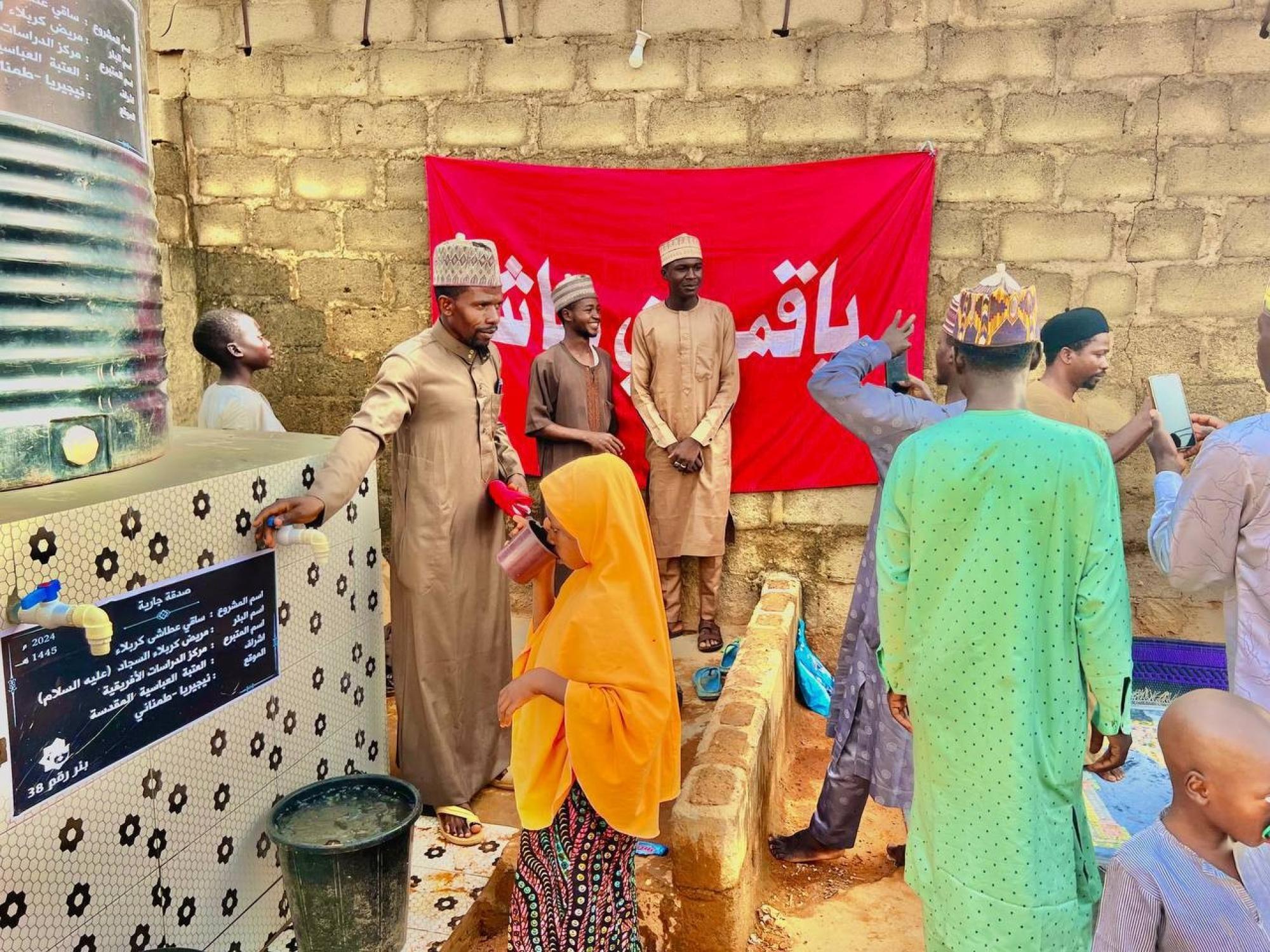
"The Center for African Studies seeks to secure a decent life for as many African families as possible through many humanitarian activities and campaigns, most notably drilling wells to provide fresh water, according to the director of the center, Sheikh Saad Sattar al-Shammari.
"The well drilling project aims to alleviate the suffering of the people of the African continent from the water crisis, as these wells have benefited thousands of families in various African countries, and the well drilling process is a great humanitarian step that reflects the spirit of Islamic Solidarity, and contributes to achieving the Sustainable Development Goals in Africa,"he added.
The center has started drilling 43 wells in 10 African countries, distributed as follows: (4 in Madagascar, 4 in Ghana, 6 in Cameroon, 5 in Senegal, 4 in Ivory Coast, 4 in Tanzania, 2 in Burkina Faso, 3 in Sierra Leone, 2 in Chad and 9 in Nigeria) and all these wells bore the names of the Ahl al-Bayt (peace be upon them) within the project (Saqi Atasha Karbala).
Effects of the project
The official of religious communication at the Center for African Studies, Mr. Muslim al-Jaberi, said that "the project (Saqi Atasha Karbala) continues to drill wells in a number of African countries to provide safe drinking water and irrigation to hundreds of poor and needy families living in remote cities in Africa, which rely heavily on agriculture and grazing, which enhances the ability of residents to farm and raise animals, and improves their standard of living in general.
"The center continues to implement its expansion program, focusing on reaching as many African villages and cities in need as possible, to achieve the greatest positive impact on the lives of individuals and African communities,"al-Jaberi added.
The Saqi Atashi Karbala project, sponsored by the Al-Abbas's (p) holy shrine, provides fresh water for human consumption and irrigation in African countries, which makes it possible to maintain public health, contribute to agricultural and economic development, and strengthen relations between the Al-Abbas's (p) holy shrine and the African peoples.