العربية
 فارسى
فارسى Türkçe
 اُردُو
 Français
 Deutsch
 Kiswahili
 Español
 Azərbaycan
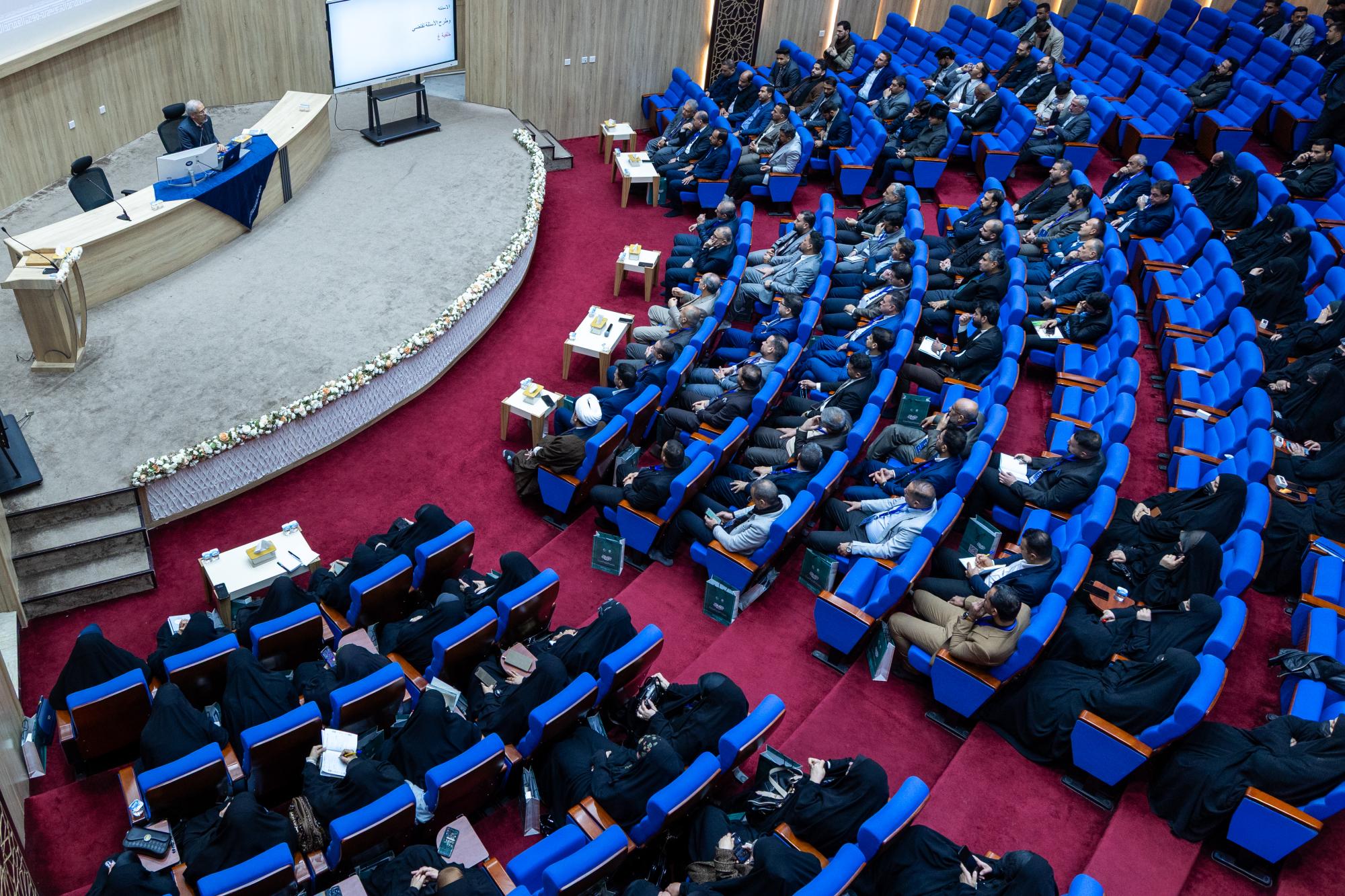
This came during their participation in the forum organized by the Education and Teaching Department of the Holy Shrine under the title: "Building an Islamic Educational Philosophy between the Possible and the Impossible," which lasts for three days at the Al-Ameed Educational Group.
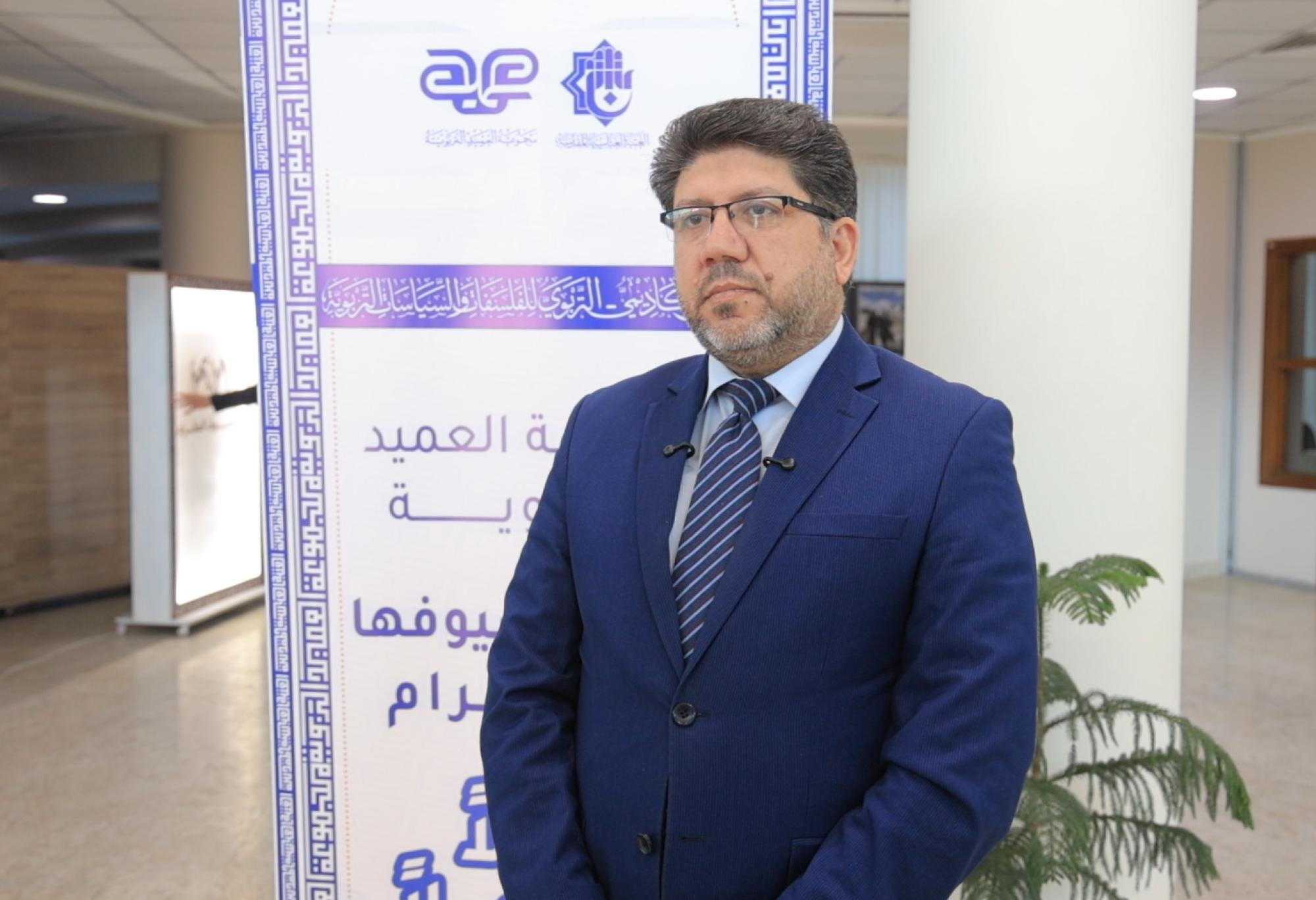
The faculty member at Karbala University, Dr. Qassem Al-Karkushi, said: The forum focused on enhancing the interactive relationship between the student and the professor based on the Islamic methodology and the correct Islamic vision, through the invitation of Professor Khosrow Bagheri, one of the most prominent contemporary thinkers in the philosophy of education.
He added that it is important to stimulate questioning and critical thinking in students without imposing the teacher's beliefs, to listen to the ideas presented, and to strengthen the positive relationship based on joint work between the student and the professor. He emphasized the necessity of starting from Islamic heritage while benefiting from other realistic, scientific, and cultural data to build a successful educational relationship that enhances the student's awareness and ability to interact with their environment.
Al-Karkushi pointed to the efforts of the Al-Abbas's (p) Holy Shrine in providing a comprehensive educational environment that includes modern classrooms, advanced libraries, and qualified educational staff, in addition to continuous training programs. This has made its educational institutions a focal point of interest and wide acceptance from various segments of society, achieving educational outcomes that meet modern aspirations.
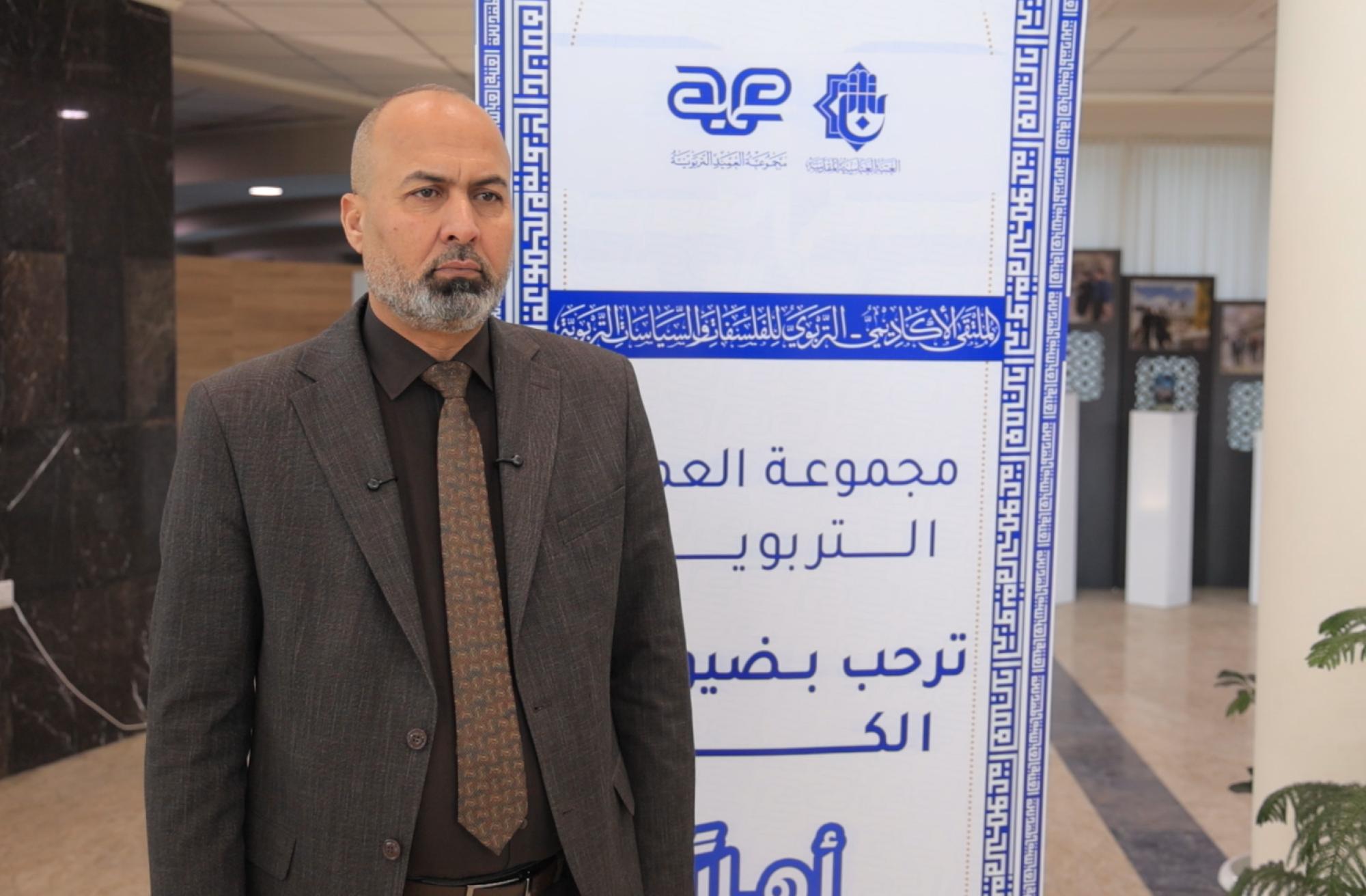
For his part, the Dean of the College of Education for Human Sciences at Karbala University, Dr. Hadi Al-Saidi, confirmed that the forum highlighted the importance of the interactive relationship between the student and the professor according to the Islamic curriculum and the correct Islamic vision. He pointed out that the forum worked on instilling the habit of raising questions and critical thinking in students, starting from the Islamic heritage while benefiting from realistic, scientific, and cultural data, with the aim of building a successful and balanced educational relationship.
The forum aims to establish a contemporary Islamic educational vision that is grounded in intellectual constants and authentic values, and seeks to align Islamic educational philosophy with cognitive changes and the current educational reality, contributing to the development of educational policies and the construction of an effective educational system capable of facing contemporary intellectual and educational challenges.